
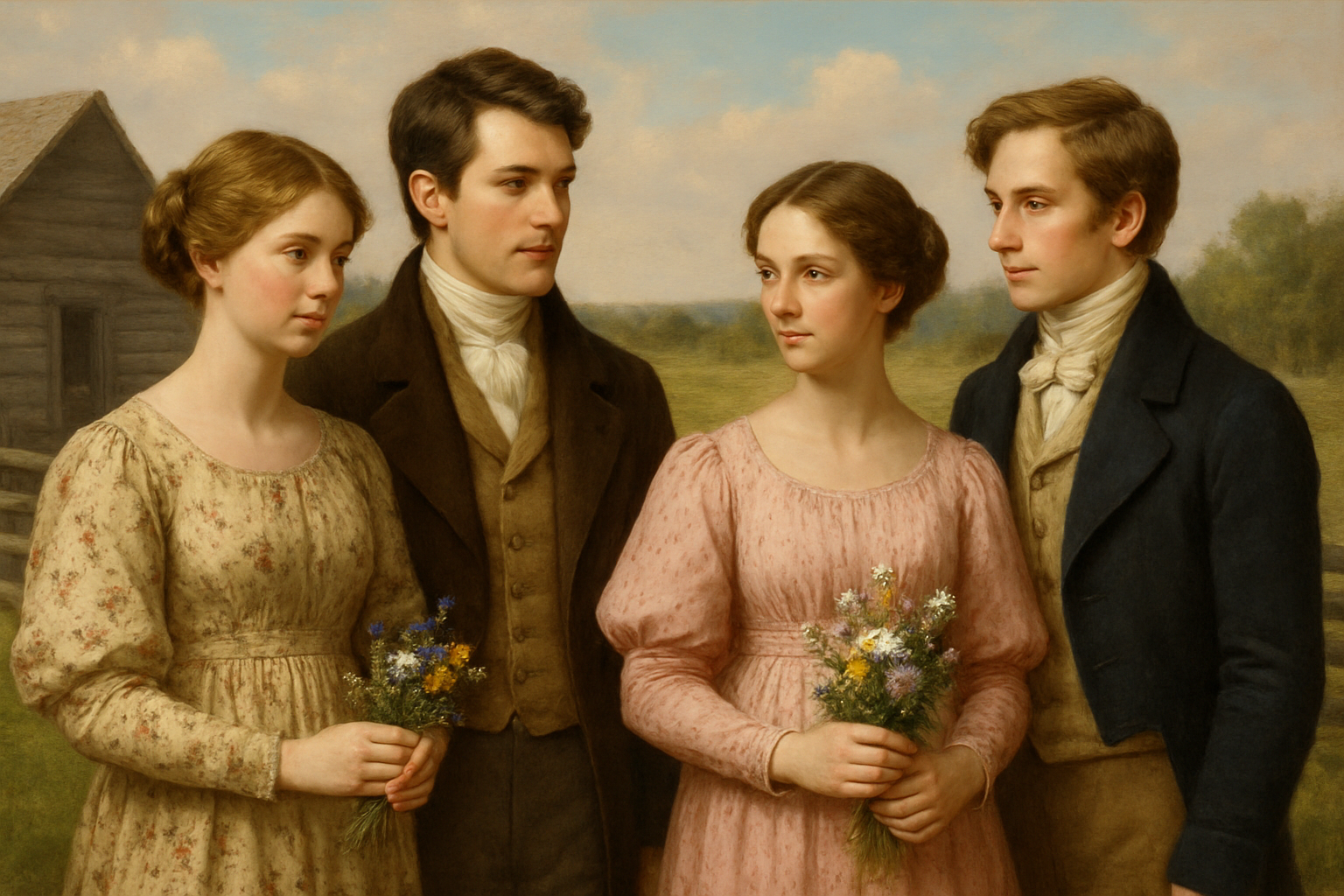
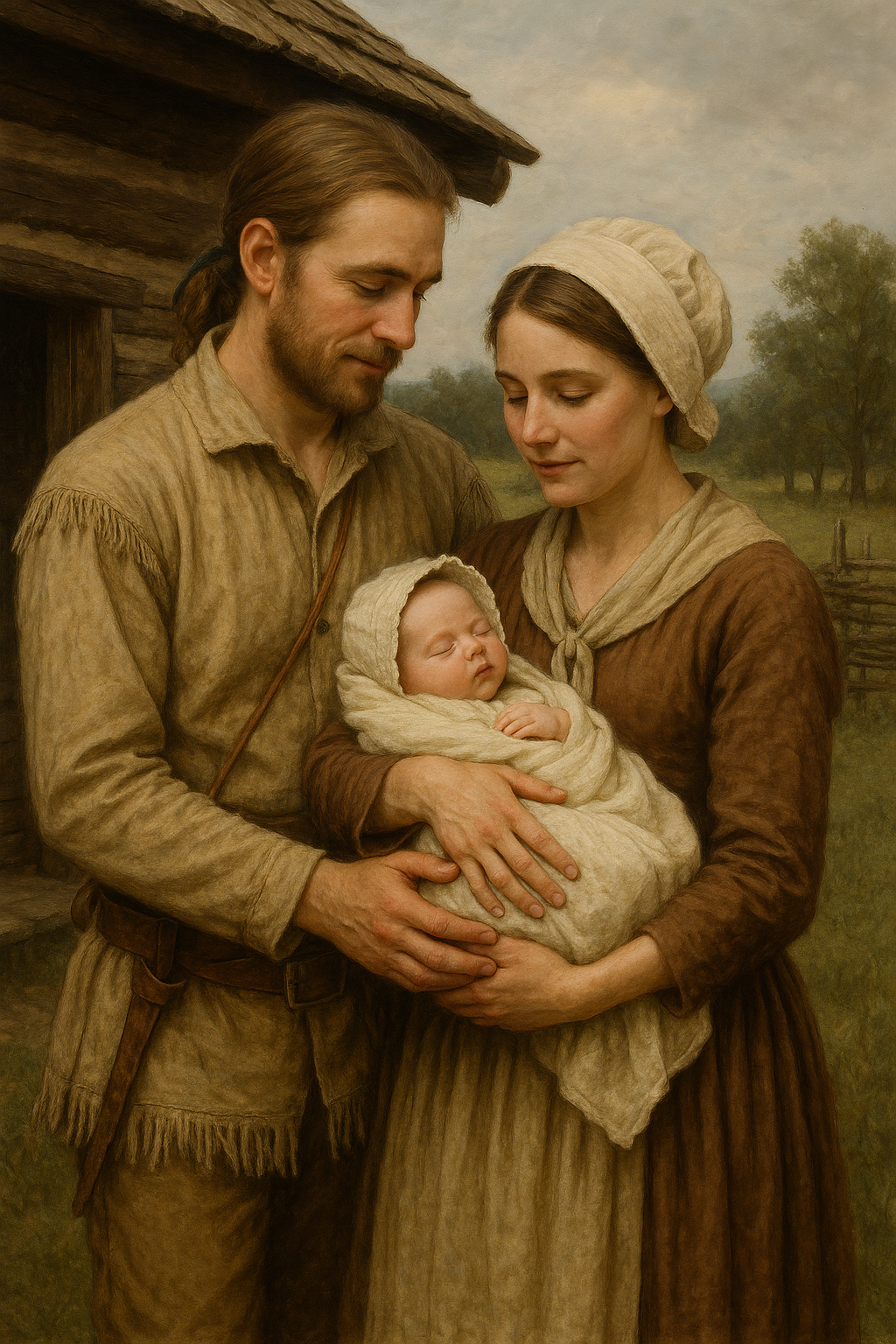
Important note: For the first time, I am adding AI-generated illustrations to an article. Please do not add these to your family tree.
Before the US Census began recording the names and ages of household members in 1850, the only records we have of some of our female ancestors in the United States are their marriage records.
This is the case with Arvida (sometimes Anna) Ooley Johnson (ca. 1804–ca. 1833), my fourth great-grandmother (Arvida > Sarah Johnson Light > Nathaniel Light > Clara Light Schlotman, my great-grandmother).
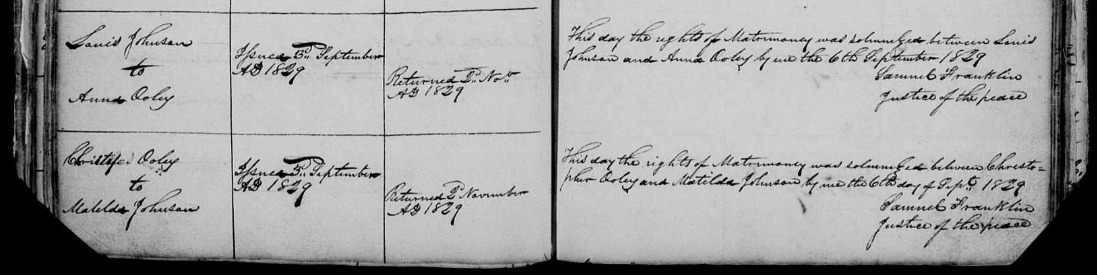
Arvida married Lewis Johnson (sometimes Lewis David Johnson) on 6 Sep 1829, in Owen County, Indiana, by Justice of the Peace Samuel Franklin. It was a double wedding, with siblings marrying siblings—Arvida’s older brother, Christopher Ooley, married Lewis’ sister, Matilda Johnson.
This is the only record of Arvida, and I believe Justice Franklin recorded her name incorrectly. When he recorded the marriages two months later, he wrote “Anna.”
What else do we know about Arvida? Her name is of Swedish origin and is pronounced ahr-VEE-duh.
In 2001, I borrowed Helen Light Thomson’s genealogy notebook and copied it. One section, “Notes from Uncle Elven,” mentioned that “Sara Johnson Light’s mother’s name was Ooley (Swedish).”
What I’ve found is that Ooley is not a Swedish name, but an English one, with origins in Warwickshire. I think that Uncle Elven Light’s information was not entirely incorrect, though. Arvida is a Swedish name, so there is likely some fairly recent Swedish ancestry in that line.
What’s more, sometimes the name is spelled “Owley” or “Wooley,” both of which are also English names.
Arvida’s parents were John (1756–1833) and Martha Carpenter Ooley (1765–1836). Both were from what would later become Virginia and/or Kentucky. The information online is conflicting, but they were definitely both born here in what would become the United States. They married in Madison County, Kentucky, in 1791.
We don’t know when Arvida was born, but the year 1804 is associated with her in many family trees. Her birth location is most often cited as Green County, Kentucky, which is south and east of, and borders, LaRue County, the birthplace of Abraham Lincoln. They were of the same generation, as Lincoln was born when Arvida was five years old. However, it is more likely that Arvida was born in Madison County, Kentucky, as her family appears to have been enumerated there in 1810.
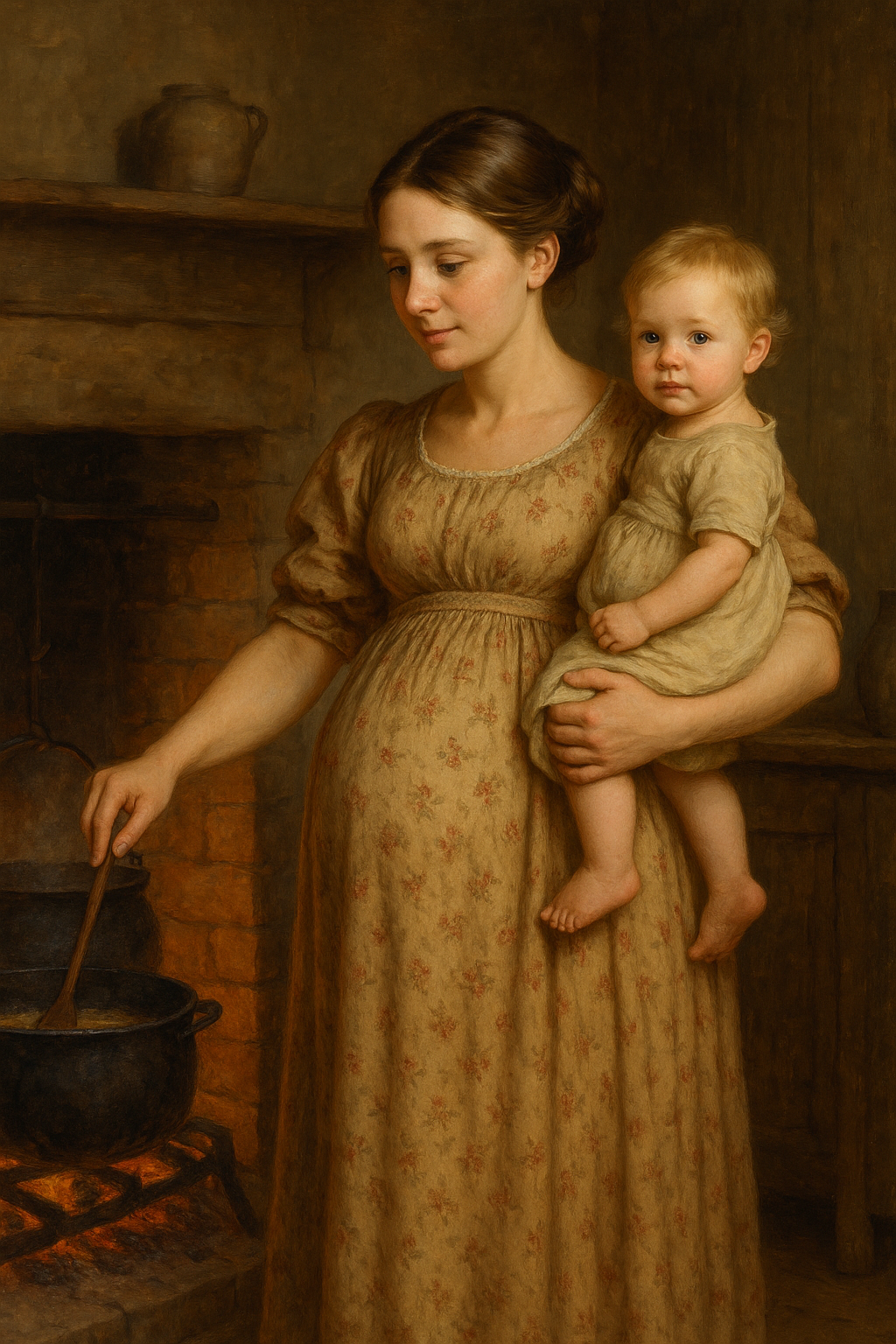
Arvida had her first child, Eliza Ann Johnson (1830–1875), the year after her marriage.
Sarah Ann Johnson was born on 14 Feb 1832. No other children of this marriage are known, but there was time for another child to be born between the sisters, depending on when the first was born.
Arvida died sometime after the birth of Sarah Ann and before February 27, 1834, when Lewis remarried to Elizabeth “Betsey” Wise (1815–1888).
Waiting periods before remarriage were generally about a year for men and a few years for women unless there were young children who needed a mother. In such cases, the typical time between the mother’s death and the father’s remarriage was about six months. This suggests that Arvida likely died around the end of August 1833. This date is actually one I’ve seen in family trees.
Arvida’s cause of death is not known, but the most common causes of death for young women at that time were tuberculosis (consumption) and childbirth-related complications. The latter is possible, as about eighteen months passed between the birth of her last child and her presumed death date.
We don’t know where Arvida is buried, but I strongly believe she rests at Leach Cemetery in Franklin Township, Owen County, Indiana. This cemetery is located on the land once owned by her father, John Ooley. Her parents are supposed to be buried there, as are her siblings, and her husband and his second wife. I’ve visited Leach Cemetery, where many field stones are marked with only the year of death. The earliest currently marked and identified grave is from the 1850s, but there are undoubtedly older burials there.