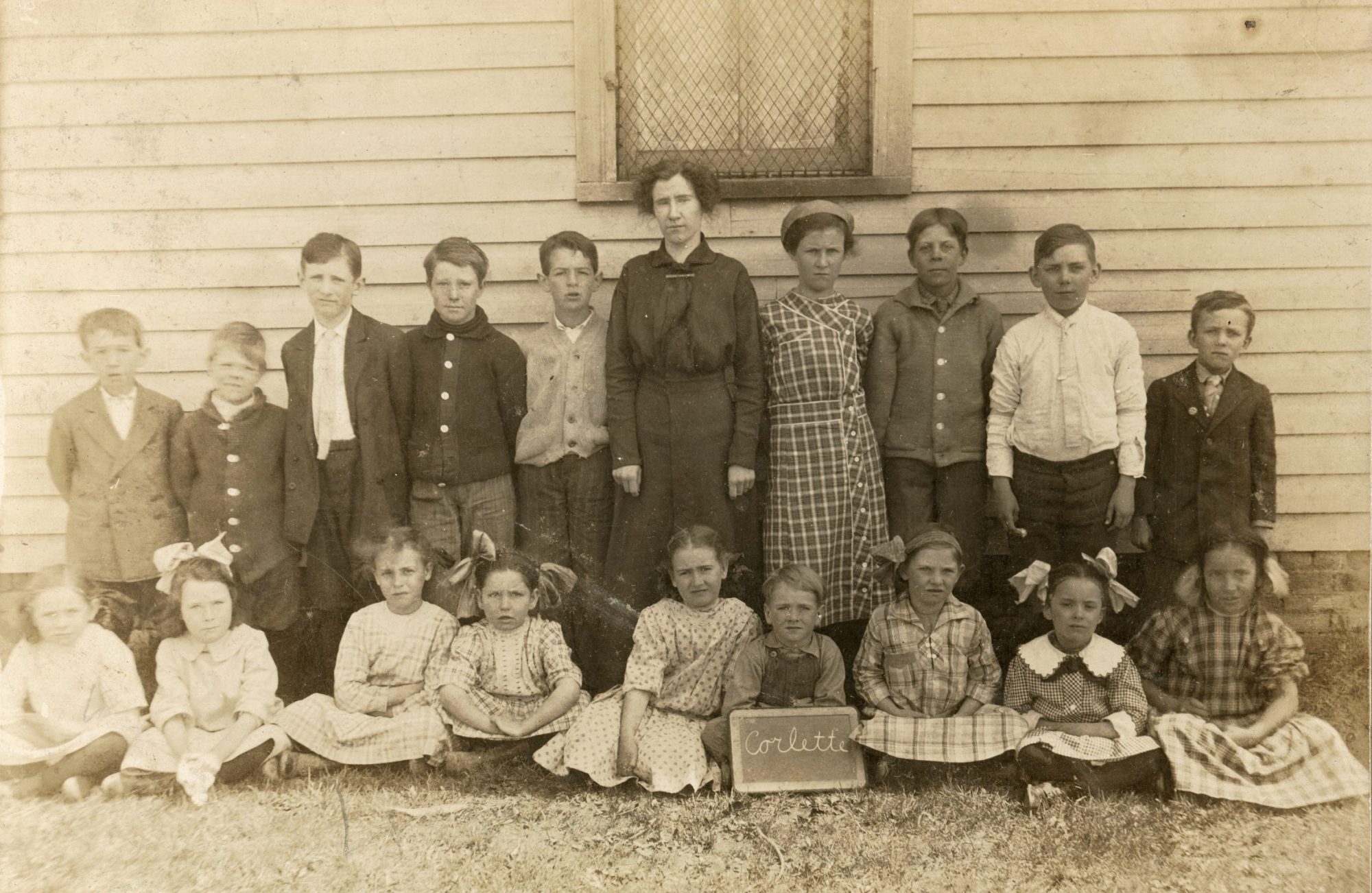
Important note: For the first time, I am adding AI-generated illustrations to an article. Please do not add these to your family tree.
Before the US Census began recording the names and ages of household members in 1850, the only records we have of some of our female ancestors in the United States are their marriage records.
This is the case with Arvida (sometimes Anna) Ooley Johnson (ca. 1804–ca. 1833), my fourth great-grandmother (Arvida > Sarah Johnson Light > Nathaniel Light > Clara Light Schlotman, my great-grandmother).
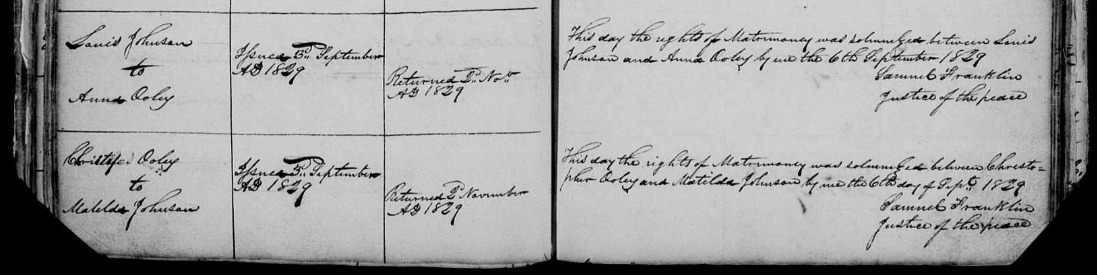
Arvida married Lewis Johnson (sometimes Lewis David Johnson) on 6 Sep 1829, in Owen County, Indiana, by Justice of the Peace Samuel Franklin. It was a double wedding, with siblings marrying siblings—Arvida’s older brother, Christopher Ooley, married Lewis’ sister, Matilda Johnson.
A double wedding
This is the only record of Arvida, and I believe Justice Franklin recorded her name incorrectly. When he recorded the marriages two months later, he wrote “Anna.”
The marriage record of the Ooleys and Johnsons from FamilySearch. This can be found at: FamilySearch.org
What else do we know about Arvida? Her name is of Swedish origin and is pronounced ahr-VEE-duh.
In 2001, I borrowed Helen Light Thomson’s genealogy notebook and copied it. One section, “Notes from Uncle Elven,” mentioned that “Sara Johnson Light’s mother’s name was Ooley (Swedish).”
What I’ve found is that Ooley is not a Swedish name, but an English one, with origins in Warwickshire. I think that Uncle Elven Light’s information was not entirely incorrect, though. Arvida is a Swedish name, so there is likely some fairly recent Swedish ancestry in that line.
What’s more, sometimes the name is spelled “Owley” or “Wooley,” both of which are also English names.
Arvida was born around 1804, probably in Kentucky.
Arvida’s parents were John (1756–1833) and Martha Carpenter Ooley (1765–1836). Both were from what would later become Virginia and/or Kentucky. The information online is conflicting, but they were definitely both born here in what would become the United States. They married in Madison County, Kentucky, in 1791.
We don’t know when Arvida was born, but the year 1804 is associated with her in many family trees. Her birth location is most often cited as Green County, Kentucky, which is south and east of, and borders, LaRue County, the birthplace of Abraham Lincoln. They were of the same generation, as Lincoln was born when Arvida was five years old. However, it is more likely that Arvida was born in Madison County, Kentucky, as her family appears to have been enumerated there in 1810.
Arvida had at least two children, both girls.
Arvida had her first child, Eliza Ann Johnson (1830–1875), the year after her marriage.
Sarah Ann Johnson was born on 14 Feb 1832. No other children of this marriage are known, but there was time for another child to be born between the sisters, depending on when the first was born.
Arvida died sometime after the birth of Sarah Ann and before February 27, 1834, when Lewis remarried to Elizabeth “Betsey” Wise (1815–1888).
Waiting periods before remarriage were generally about a year for men and a few years for women unless there were young children who needed a mother. In such cases, the typical time between the mother’s death and the father’s remarriage was about six months. This suggests that Arvida likely died around the end of August 1833. This date is actually one I’ve seen in family trees.
Arvida’s cause of death is not known, but the most common causes of death for young women at that time were tuberculosis (consumption) and childbirth-related complications. The latter is possible, as about eighteen months passed between the birth of her last child and her presumed death date.
We don’t know where Arvida is buried, but I strongly believe she rests at Leach Cemetery in Franklin Township, Owen County, Indiana. This cemetery is located on the land once owned by her father, John Ooley. Her parents are supposed to be buried there, as are her siblings, and her husband and his second wife. I’ve visited Leach Cemetery, where many field stones are marked with only the year of death. The earliest currently marked and identified grave is from the 1850s, but there are undoubtedly older burials there.
The Thomas and Elizabeth Cahoe Family Bible no longer exists (that we are aware of). All that is left are the three pages of family records.
In the late 1990s or early 2000s, I scanned (in low quality, unfortunately) three loose pages from the Cahoe Bible. They were tucked into a large, modern Bible that belonged to my grandmother, Imogene Cahoe Stone (1918–2004). She was the daughter of Patsie Edward Cahoe, whose birth is included in the records, as he was the son of Thomas and Elizabeth.
Grandma pointed out that the births had been altered. She said that a Cahoe sister (Pearl, I think) changed it to make herself seem younger than she was. Regardless of the reason, it has clearly been altered with what looks like a blue ballpoint pen.
The entries in the records are all in the same hand. I believe it is the handwriting of Rachel Cahoe, as Thomas Cahoe’s signature doesn’t match.
The entries also seem to have all been made at the same time, as they are uniform in appearance. If the events were recorded as they happened, there would be variation in the pen, ink, or hand used. This means that it is a snapshot of the Cahoe family at a certain point in time.
The family record was created at some point after the death of Viola M. Cahoe in May 1889 and before the first marriage of the family, that of John Thomas Cahoe in Oct 1896. So, the Bible was probably bought, and the records were completed between 1889 and 1896. The family was living in Watseka, Illinois, at that time.
The Holman Bible An internet search yielded an exact match for the record pages in an 1890 edition of The Parallel Bible, Pronouncing Edition, for sale on eBay. The fourteen-pound bible for sale includes over 2000 illustrations, some in color, and is four inches thick. It is a “Holman Bible,” published by A. J. Holman Company in Philadelphia.
The Holman Bibles were sold by travelling salesmen. The salesmen didn’t work directly for Holman, and the company that they worked for was listed as the publisher. You can tell a Holman Bible by the “Light of the World” logo on the title page.
These salesmen carried sample books that showed the different bindings and samples of the inside content to the customer. The customer could choose from several models. Each upgrade included more features and an upgraded binding. Prices went up according to the customer’s choices. Metal closures could be added for an additional charge.
All versions of the Holman Bible included the family record pages, so it is impossible to know which version the Cahoe family bought. Prices ranged from about $5 to $12, which would be about $135 to $325 in today’s dollars (2019).
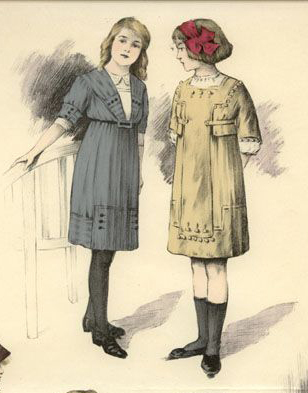
A 1912 fashion illustration shows the type of thing Clara and Mirla might have worn around the time they met. [Pinterest: Queen PoohBear]
My great-grandmother, Clara Schlotman, recorded some stories on a cassette tape for me in the Summer of 1999. One of the stories she told me started with her family’s move from their rented farm in Concord Township, Iroquois County, to the village of Sheldon, Illinois.
At that time, in about 1912, Clara’s father, Nathaniel Light (1857-1916) was in failing health. He had been diagnosed with Bright’s Disease and found himself unable to do farm work.
Nathaniel moved his family into town where they ran a restaurant. I believe they lived above the restaurant, which was located in downtown Sheldon. It was there that my grandmother met Mirla Dibble.
"There was a little girl that lived in the apartment not too far down the street from where we were.  So, I walked to school with her.  I learned the city by walking to school with her.  She was real nice.  Her name was Mirla Dibble.  She wasn't well.  She was a very frail little girl, and she didn't live maybe ten years later."

Clara Light Schlotman (1905-2001), Summer 1999, remembering her childhood in Sheldon, Illinois in 1912
Mirla E. Dibble was born in 1906 in Wells, Fairbault County, Minnesota. Her parents were Louis Orrin Dibble (1875-1930), a native of Minnesota, and her mother was Emma Eugenia Tiedt Dibble (1870-1967), from Wisconsin. Both Louis and Emma came from German immigrant parents. The couple married in 1898 in Minnesota and had seven (known) children there:
Melville Earl Dibble (1899-1899)
Laverna Belle Dibble Marshall (1900-1994)
Infant Twins (1902-1902)
Lura Dell Dibble Penticott (1903-2004)
Mirla E. Dibble (1906-1929)
Cherril Louis Dibble (1908-1980)
At some point before the 1910 census, Louis Dibble moved his family to Sheldon, Iroquois County, Illinois. They were enumerated in Sheldon village where Louis worked as a dredgeman in the ditching industry.
By 1918, the Dibbles had moved to Crown Point, Lake County, Indiana where they lived at 308 Grant Street. Louis registered for the draft that September and reported that he was working as an engineer for the Inter State Public Service Company.
At the time of the 1920 census, the family was still in on Grant Street in Crown Point. Louis was a laborer and Emma worked as a waitress. Eldest daughter Laverna was by then Mrs. Roy Marshall and living on East Grove Street back in Sheldon, Illinois. At home in Crown Point, Lura Dell was sixteen and had a job as a stenographer in a law office. Mirla and Cherril attended school.
At some point after 1920, it seems that Louis and Emma divorced. Louis later remarried and died in 1930 from a heart attack.
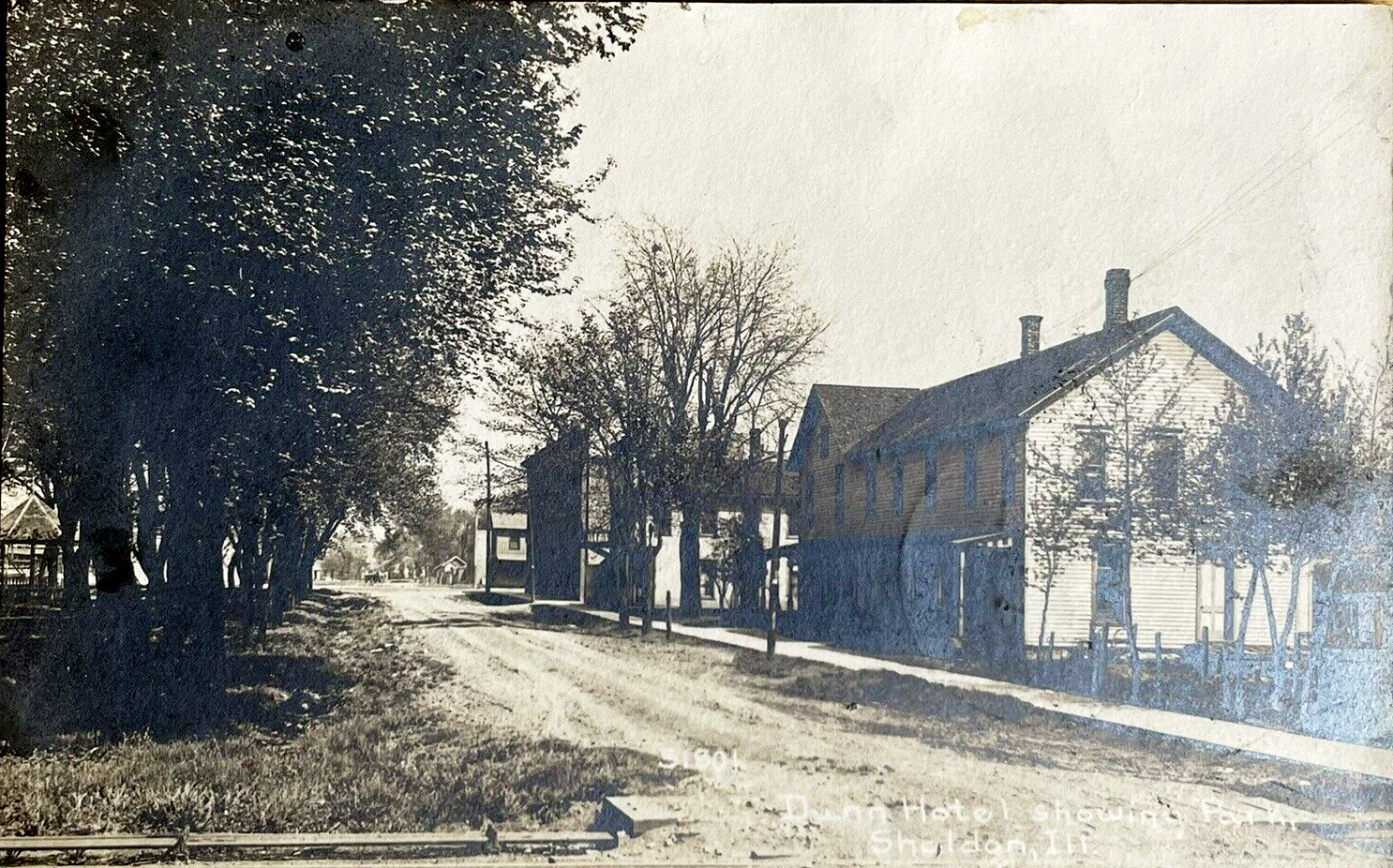
The Dunn Hotel
A C. R. Childs photo postcard from 1912 showing the Dunn Hotel in Sheldon, Illinois [eBay]
On 29 July 2022, Stella Cyr, the granddaughter of Laverna Dibble Marshall responded to a post in “History of Sheldon, Illinois (Iroquois County),” a Facebook group I am admin for, by Georgia Potts about the Dunn Hotel in Sheldon, Illinois:
“Believe this is the Hotel my Grandma Laverna (Dibble) Marshall worked at as a teenager. Met my Grandpa Roy Marshall and they married in 1918. At one time, I knew the ladies name who ran it. Dad (Francis Marshall) talked about it.”

Stella Cyr, 29 July 2022, speaking about the Dunn Hotel in Sheldon, Illinois
The uncommon Dibble name caught my eye and I asked if she was any relation to Mirla. She told me:
"Myrla Dibble was my Grandma Laverna’s younger sister.  As a young woman, Myrla went to Chicago to stay with Luradell (another sister).  Myrla was found deceased in a alley-side street wearing Luradell’s fur coat.  Believe she is buried in Crown Point, Ind. and haven’t researched the actual site to know her age when she died but believe she may have been in her 20’s.  I’ve never seen any pictures or obituary for her.  As with many families, the history is lost when you don’t asked questions of your elders."

Stella Cyr, 29 July 2022, speaking about her grandaunt, Mirla Dibble
Death of a Jane Doe
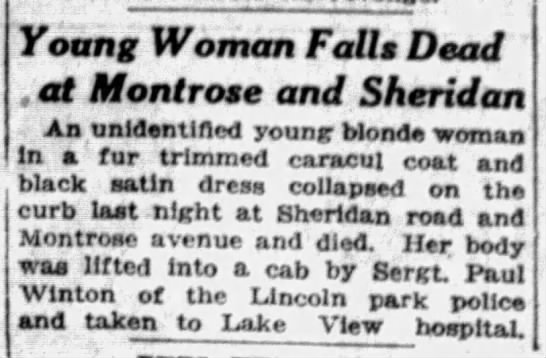
A search of Newspapers.com in the Chicago Tribune for 1929 quickly yielded small bits of information about Mirla’s sad end. The following appeared on 17 March 1929 on page two:
“Young Woman Falls Dead at Montrose and Sheridan,” Chicago Tribune, Chicago, Illinois, 17 Mar 1929, Sunday, Page 2 [Newspapers.com]
Young Woman Falls Dead at Montrose and Sheridan

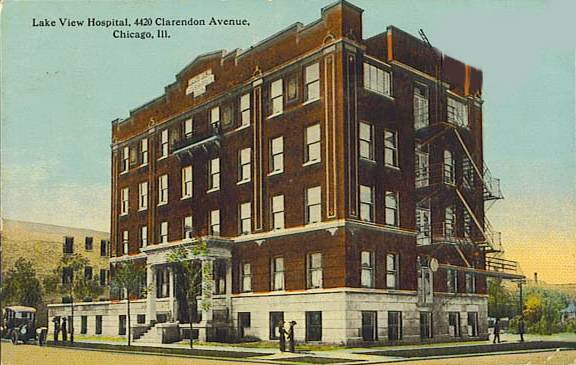
An unidentified young blonde woman in a fur trimmed caracul coat and black satin dress collapsed on the curb last night at Sheridan road and Montrose avenue and died.  Her body was lifted into a cab by Sergt. Paul Winton of the Lincoln park police and taken to Lake View hospital.
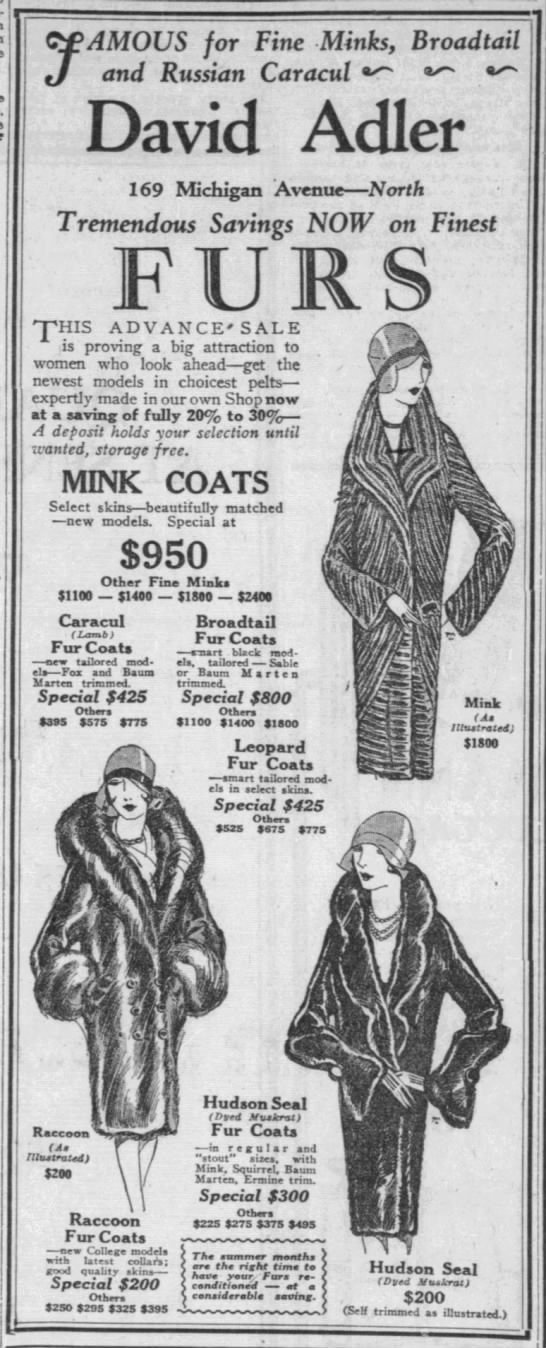
An ad for David Adler in Chicago from 1928 showing Caracul (Lamb) Fur Coats trimmed with fox and baum marten. Mirla was wearing her sister Lura’s fur coat when she died. [Newspapers.com]
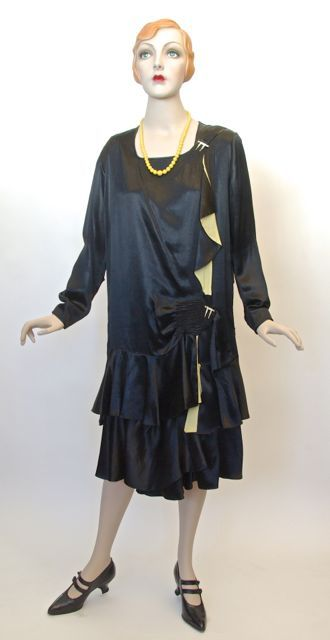
A circa 1929 black satin dress showing the style Mirla Might have been wearing the night of her death [Etsy: Fashion History Museum]
Lake View Hospital where Mirla’s body was taken in a cab by Sgt. Paul Winton of the Lincoln Park Police. This building was demolished in the 1970s [ Chuckman’s Photos]
Mirla Identified
It took only one day for the following to appear in the Chicago Tribune:
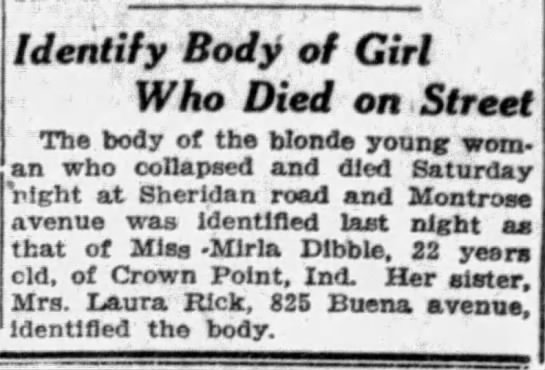
“Identify Body of Girl Who Died on Street,” Chicago Tribune, Chicago, Illinois, 18 Mar 1929, Monday, Page 4 [Newspapers.com]
Identify Body of Girl Who Died on Street

The body of the blonde young woman who collapsed and died Saturday night at Sheridan road and Montrose avenue was identified last night as that of Miss Mirla Dibble, 22 years old, of Crown Point, Ind.  Her sister, Mrs. Laura Rick [sic., should be Rich], 825 Buena avenue, identified the body.
SHERIDAN & MONTROSE
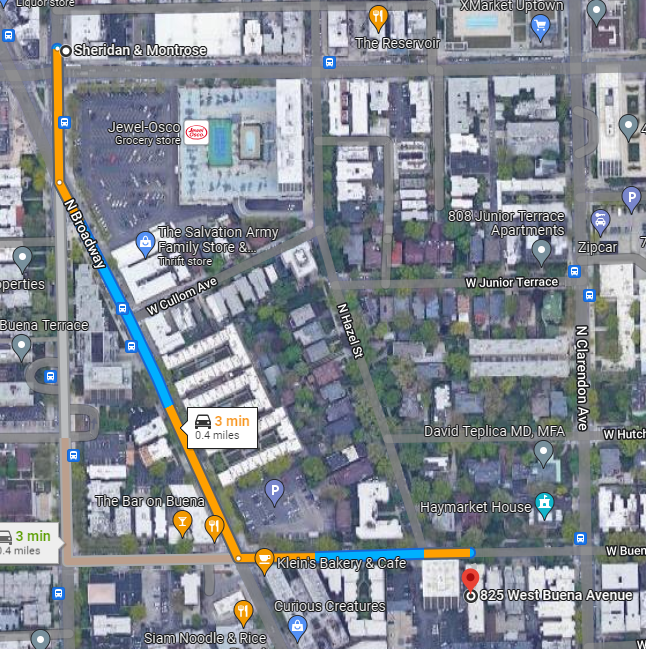
Mirla’s grandniece, Stella Cyr, told us that Mirla was staying with her sister. Here is a map showing how close the location of Mirla’s collapse at Sheridan and Montrose was to Lura’s 825 Buena Avenue home:
825 W Buena Ave, Chicago, IL 60613 to Sheridan & Montrose, Chicago, IL – [Google Maps]
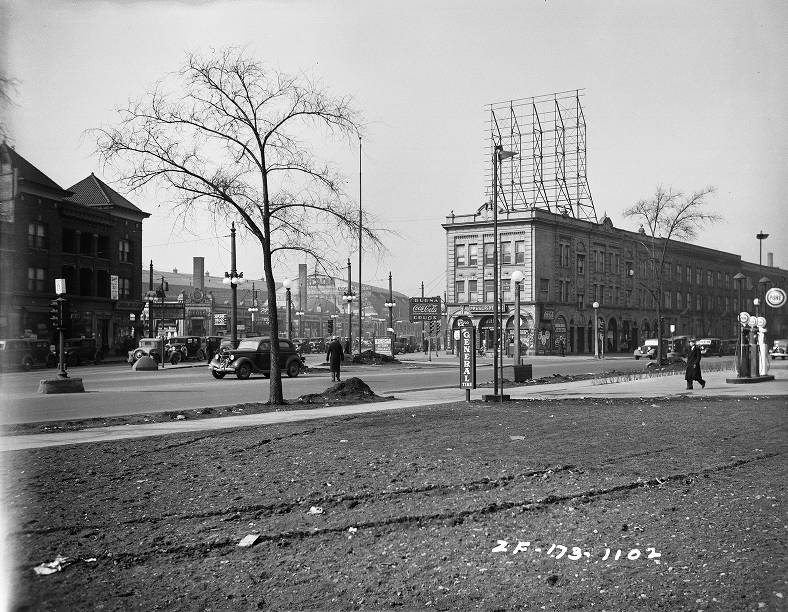
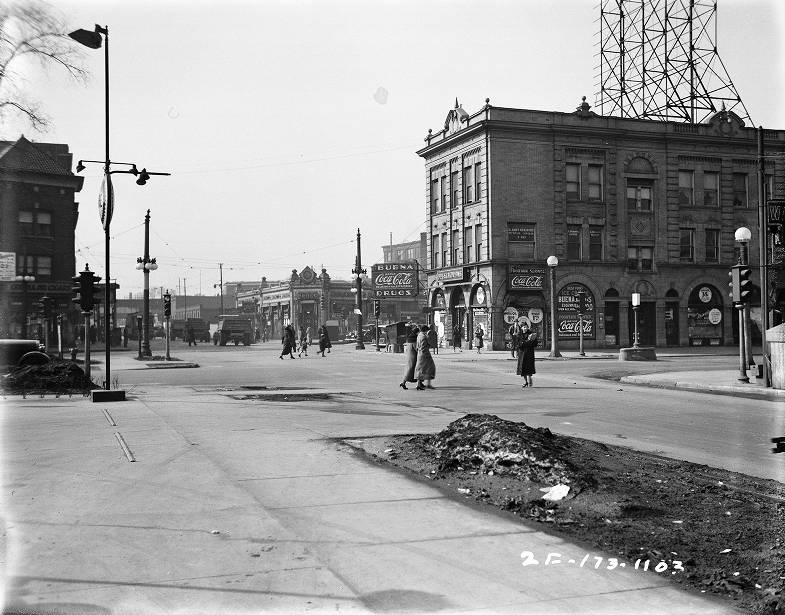
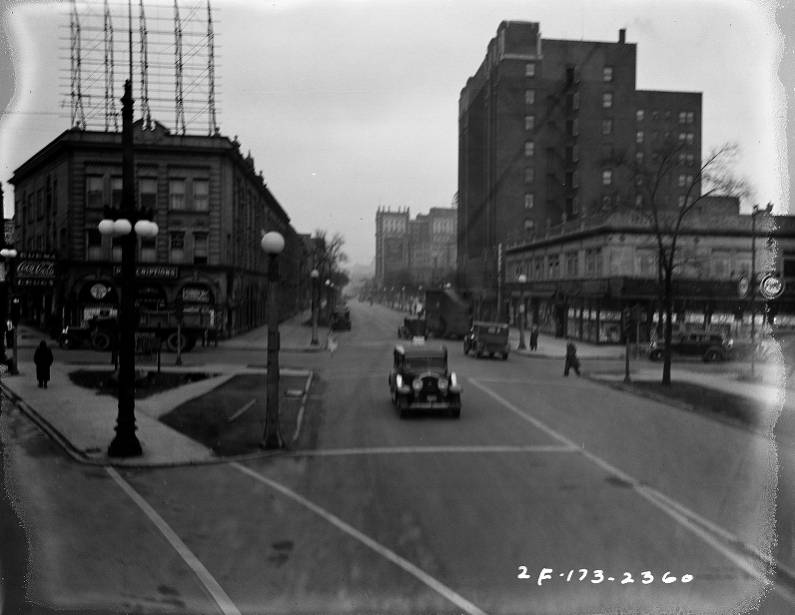
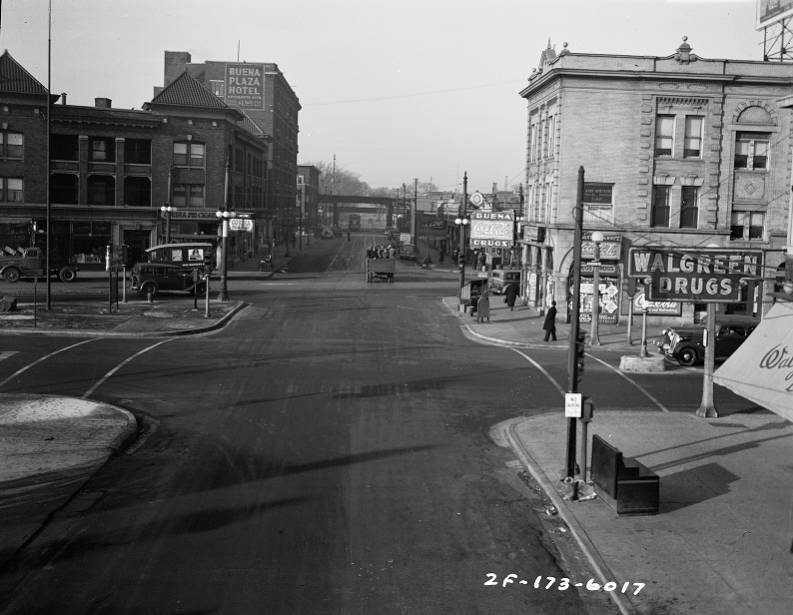
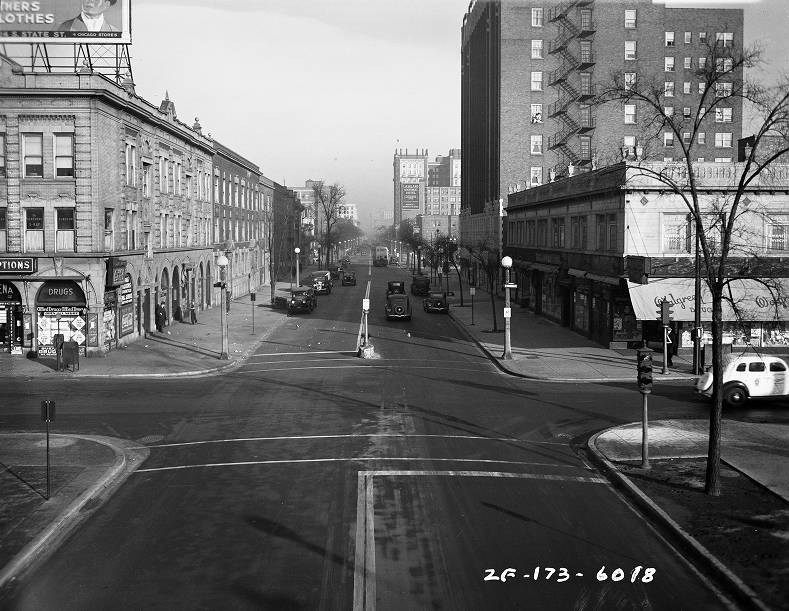
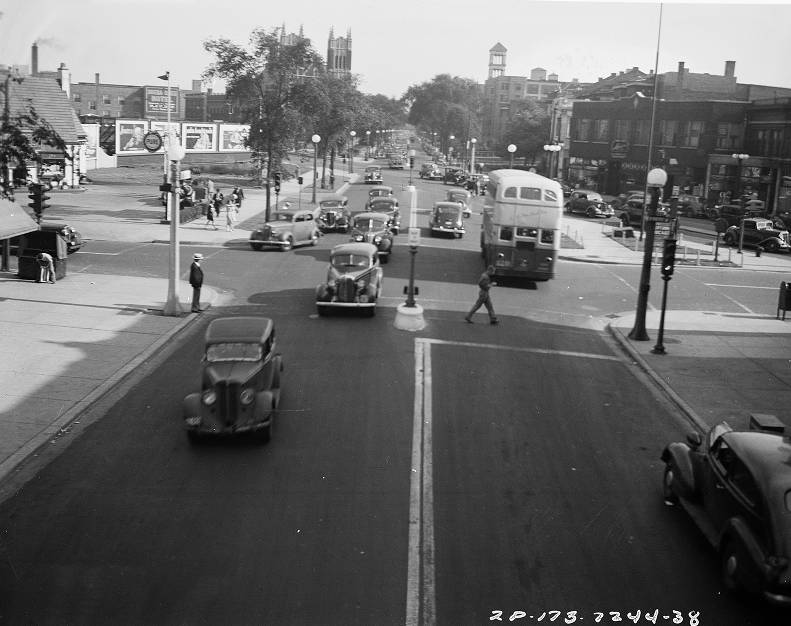
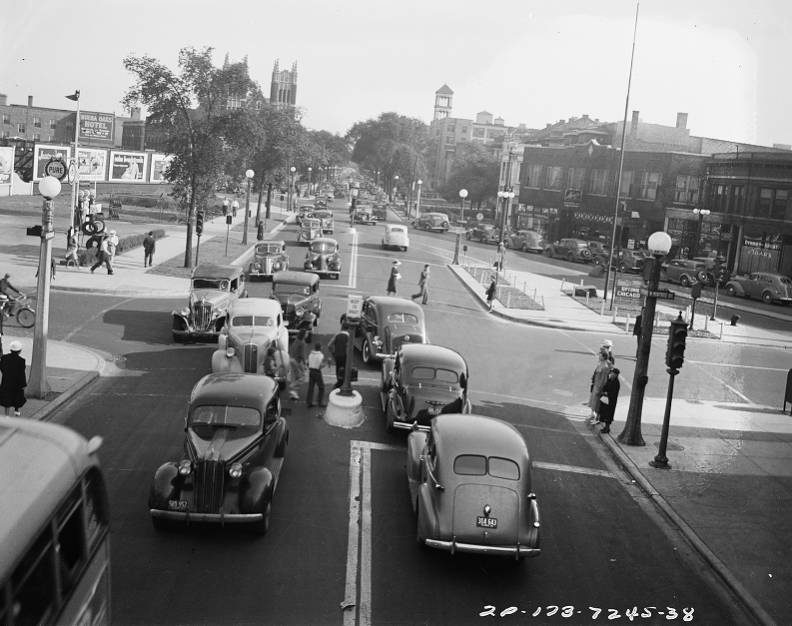
I found these IDOT Chicago Traffic Photographs on the website of the University of Illinois Chicago. They show the intersection where Mirla collapsed as it looked in 1936, just seven years after the event.
Sheridan Road; Montrose Avenue. Looking west.Sheridan Road; Montrose Avenue. Looking northwest. Sheridan Road; Montrose Avenue. Looking north.Sheridan Road; Montrose Avenue. Looking west.Sheridan Road; Montrose Avenue. Looking north. North Sheridan Road at West Montrose Avenue. Photograph was taken at 5:15 PM. N. Sheridan Road at W. Montrose Avenue. Photograph was taken at 5:25 PM.Traffic Intersection at N. Sheridan Road and W. Montrose Ave. [CARLI: IDOT]
What happened to Mirla?
Mirla’s death certificate and local research would likely yield more information. For now, here’s what we know:
At the time of her death, Mirla was twenty-two years old and had blonde hair. She was staying with her sister, Lura, and was working as a “beauty operator.”
Mirla collapsed on a Saturday evening and was wearing a black satin dress and her sister’s fur coat. She was unidentified, which means she was probably alone.
We don’t know why Mirla was at the location where she collapsed. It could be that she was on her way somewhere — to a party or a dance or a friend’s house? Or, she could have been headed home. She might have been walking or had caught a bus or cab.
Mirla’s cause of death is unknown at this time. Her childhood friend, Clara Light (by then Schlotman), remembered her as a frail and sickly girl. Mirla’s father died of a heart attack at a fairly young age. Perhaps a congenital heart ailment was to blame for Mirla’s sudden death.
At Rest
Mirla’s body was identified by her sister Lura on Sunday night, about one day after her death. At that time, her name was Lura Rich, but I have failed to find information about her husband.
I have not been able to find an obituary for Mirla in the Chicago Tribune or in other online newspapers.
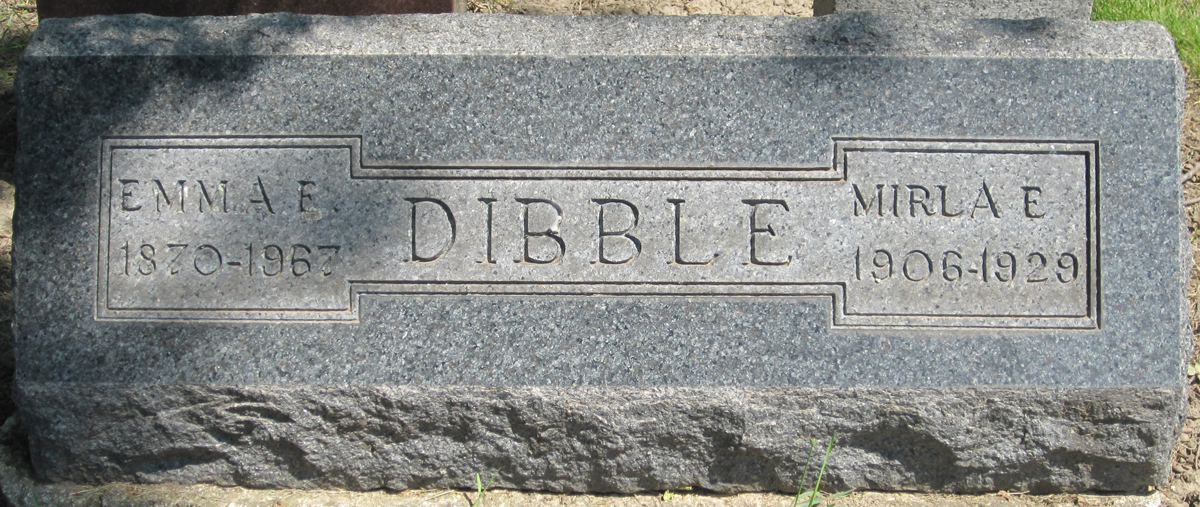
Mirla and her mother, Emma’s gravestone at Maplewood Memorial Cemetery [FindAGrave: Indiana Bill]
Three days after her death, Mirla was buried at Maplewood Memorial Cemetery in Crown Point, Lake County, Indiana. Either O. H. Jordan Company or W. A. Feguersa was in charge of the arrangements. Mirla rests beside her mother, Emma, who died in 1967 at the age of ninety-seven.
After sharing my article on Facebook, I was given some new information.
“I have a picture and the children of Louis & Emma were written on the back, including the twins. I had asked my Dad and Uncle but apparently that information was not shared with them by my Grandma, they knew nothing about the twins or the eldest son. Louis Dibble did ditch digging, in fact most of the ditches in Sheldon were dug by him and there were pictures of his machinery.  Louis & Emma did divorce and Emma moved to Crown Point. Grandma Laverna stayed in Crown Point during at least 2 of her pregnancies as my Uncle Everett and my Dad were born there.  Grandpa Roy was in WW1 at the time.”

“Louis Dibble remarried to Josephine Wojack (Iroquois, Il), and had something to do with the Nest (bar/night club) located on the South side of the Iroquois River in Iroquois, Il. I was always told that Louis Dibble was running from the copers (police) and died as a result of an automobile accident. He was 54 years old. Louis and his 2nd wife, Josephine are buried at Prairie Dell, West of Iroquois, graves located just West of the old Church. Also told he and another person were bootleggers thus the police chase.”

Stella Cyr, 1 Jul 2022, speaking about this article in the Facebook group “History of Sheldon, Illinois (Iroquois County)”
I attempted to research Louis’ death and troubles with the law but found nothing online. Local research would surely yield some information about it. Given this new information, Louis’ cause of death cited in the article, which I found in a family tree on Ancestry.com and was unsourced, should be considered possibly incorrect. And, my conclusion that a heart condition may have been the cause of Mirla’s death is now in question. UPDATE: Georgia Robertson has told me that her mother said that Mirla had heart problems. So, her death was likely due to a heart attack.
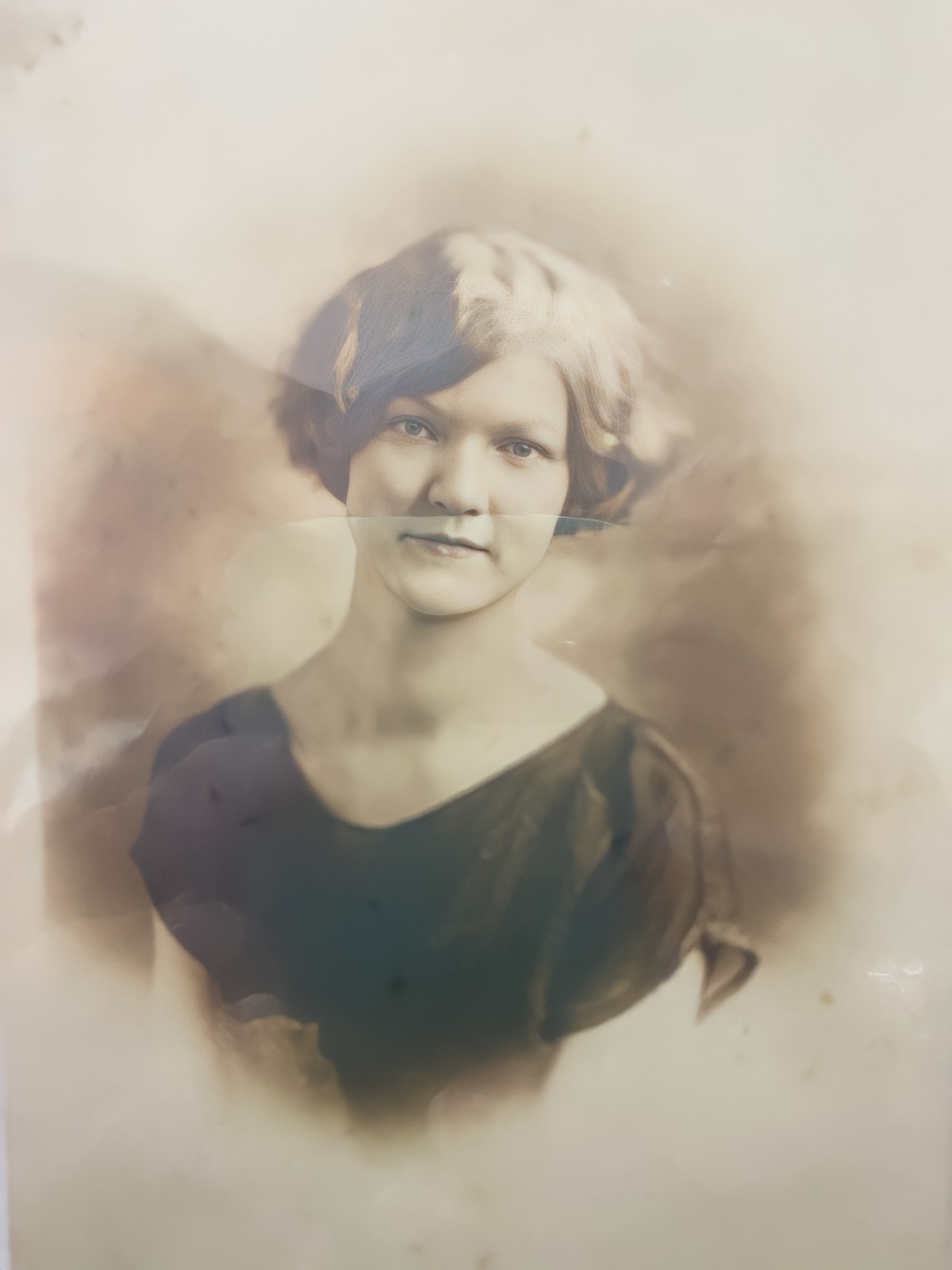
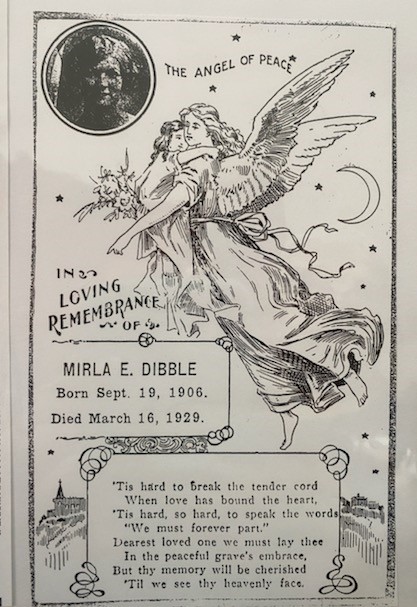
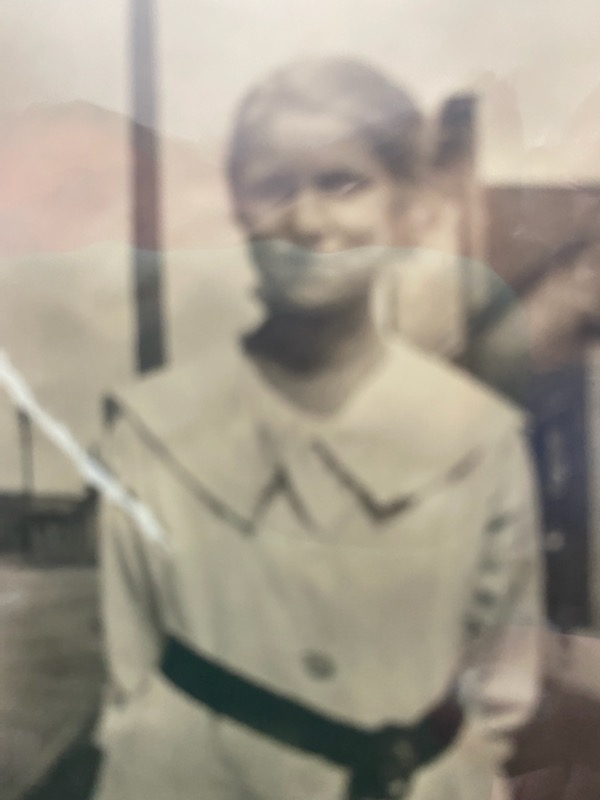
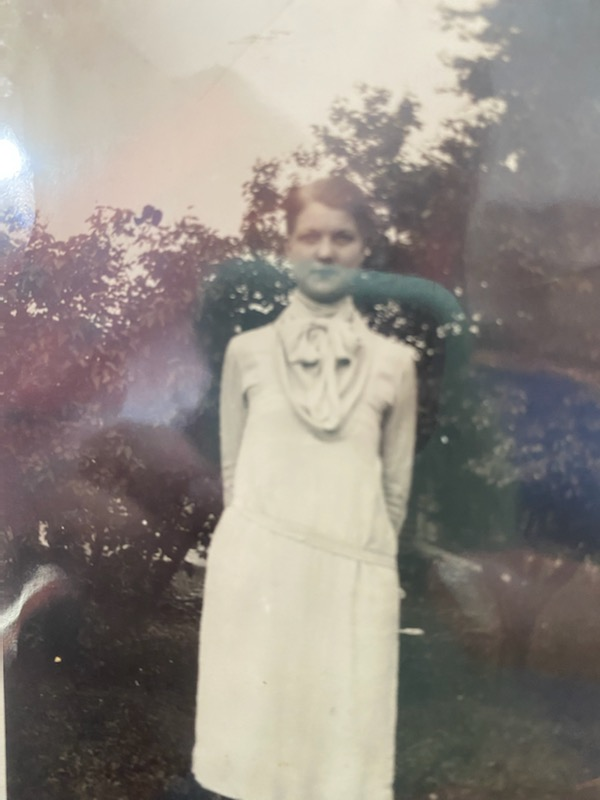
Another development is that we now have some photos of Mirla thanks to Georgia Robertson, who is another grandniece of Mirla’s. She also shared a memorial booklet which provides Mirla’s birth date – 19 September 1906.
The photos here were taken with a cell phone. I used an AI program to sharpen the portrait of Mirla, but the others are untouched.
A portrait of Mirla which looks like it might have been a senior portrait – circa 1925 This has been sharpened using an AI program.
In loving remembrance of Mirla E. Dibble Born Sept. 19, 1906. Died March 16, 1929.
‘Tis hard to break the tender cord When love has bound the heart, ‘Tis hard, so hard, to speak the words “We must forever part.” Dearest loved one we must lay thee In the peaceful grave’s embrace. But they memory will be cherished ‘Til we see thy heavenly face.
Two more photos of Mirla shared by her grandniece, Georgia Robertson